Proven Customer Retention Strategies for WooCommerce (That Increase Repeat Sales in 2026)

Share this content
Copy Link
Share



Design WooCommerce Stores That Convert
-
100+ Widgets
-
15+ Modules
-
150+ Templates
-
At Your Service
Follow us on:


Most ecommerce stores are built for acquisition. The homepage is polished. The ads are running. The product photos are sharp. And then a customer buys. The store goes quiet.
That silence is expensive. Sixty-five percent of ecommerce revenue comes from repeat buyers. A 5% increase in customer retention can boost profits anywhere from 25% to 95%. Yet the average ecommerce retention rate sits at just 30%, while top-performing stores regularly reach 62%.
This guide covers 9 strategies built around that full system. Not just email blasts and loyalty points, but every touchpoint that makes the difference between a customer returning and walking away for good.
What Is Customer Retention in Ecommerce?
Customer retention is the ongoing effort to keep buyers coming back for future purchases rather than drifting toward a competitor. A retention strategy isn’t a single campaign; it’s a combination of customer service, communication, product experience, and brand loyalty-building that together increase the likelihood a shopper returns.
Think of it this way: a new customer acquisition is a transaction. A retained customer is a relationship. And relationships are far more profitable over time.
Which Retention Metrics Tell You Where You Actually Stand
Before picking a strategy, you need a baseline. Three metrics give you the clearest picture.
Repeat Purchase Rate
This is the foundational retention number. Divide the number of customers who have purchased more than once by your total unique customer count in the same period. A repeat purchase rate below 20% signals a real problem, usually in the post-purchase experience. Between 20–40% is solid for most ecommerce categories. Above 40% puts a store among the top performers.
Customer Lifetime Value
CLV tells you what a customer is worth over the full length of the relationship. A simple way to calculate it: multiply average purchase frequency by average order value. CLV is the number that makes every retention investment make sense. Once you know what a loyal customer is actually worth, every decision about how much to spend keeping them becomes clearer.
Churn Rate
Churn measures the percentage of customers who stopped buying in a given period. High churn does not always mean a product problem. Sometimes it is a communication gap. Sometimes, it is friction in the buying experience. Identifying it early is the first step to fixing it.
9 WooCommerce Customer Retention Strategies
WooCommerce customer retention requires more than basic or outdated tactics. To keep customers coming back, you need strategies that actually match today’s ecommerce behavior.
After an in-depth analysis, I’ve compiled 10 proven WooCommerce customer retention techniques to boost repeat purchases and long-term customer loyalty.
1. Treat Store Design as a Retention System, Not a Visual Choice
Most store owners think about design once, at launch, and then move on. That is a mistake.
What Bad UX Does to Repeat Purchase Behavior
88% of users will not return after a poor experience. 94% have rejected or distrusted a website based on design-related issues alone. These numbers reveal something most retention guides skip over: retention does not start after the purchase. It starts the moment a buyer lands on a product page and begins forming impressions about the store.
Every touchpoint, from the product page layout to the cart to the confirmation email, is either building trust or eroding it.
The Design Touchpoints That Directly Affect Retention
Product pages that are cluttered or inconsistent make buyers feel uncertain, even after they have already committed. Cart pages that look generic do not reinforce the brand.
Checkout pages that look different from the rest of the store break trust at exactly the moment a buyer is about to pay. Confirmation emails that arrive as plain text feel like an afterthought from a business that stopped caring the second the order went through.
Consistency across all of these touchpoints is what separates a store that feels like a brand from one that feels like a transaction.
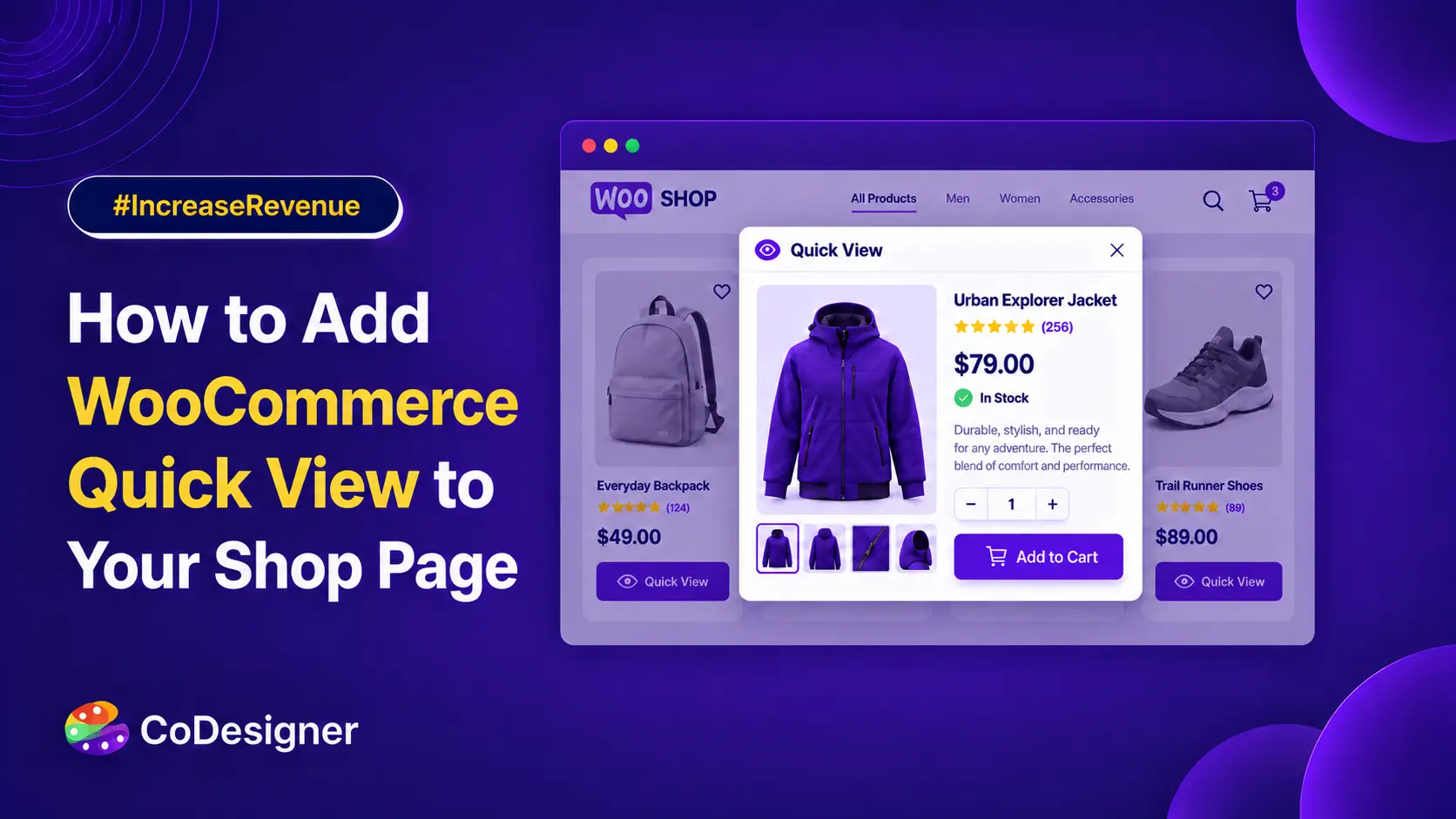
For WooCommerce stores (designed using Elementor), CoDesigner handles the no-code customization of product pages, cart, checkout, and post-purchase emails from a single plugin, keeping the visual experience consistent without requiring a developer for every update.
2. Build a Post-Purchase Email Flow That Runs on Autopilot
The sale is not the end of the relationship. What happens in the 72 hours after checkout often determines if a customer ever comes back.
The Open Rate Window Most Stores Ignore
Transactional emails, including order confirmations, shipping updates, and delivery follow-ups, hit over 62% open rates. Automated emails generate 37% of sales from just 2% of total email volume. Most stores send the default template and move on. That is one of the most consistent missed opportunities in ecommerce.
The buyer is at their most engaged right after a purchase. Wasting that moment on a generic order confirmation is a retention loss hiding in plain sight.
What Each Email in the Sequence Should Accomplish
The order confirmation should do more than confirm. A next-purchase incentive, a relevant product recommendation, or a message that feels personal rather than system-generated makes this email a retention touchpoint rather than a receipt.
The shipping confirmation should reinforce confidence. Set clear delivery expectations. Remind the buyer what they are looking forward to.
The delivery follow-up, sent 3 to 5 days after confirmed delivery, is the most underused email in the sequence. A short message checking that everything arrived catches problems before they become silent churn. It earns goodwill at the moment the product experience is freshest. Customers who feel looked after after a purchase are far more likely to return than those who never heard from the store again.
For automation, AutomateWoo, Klaviyo, and Omnisend all handle WooCommerce-specific purchase triggers and can run these sequences without manual involvement.
3. Make Checkout Frictionless for Returning Buyers
Checkout friction is a retention problem, not just a conversion problem.
How Checkout Friction Kills Second Purchases
A difficult checkout does not just lose the current sale. It creates a negative memory that surfaces the next time a buyer considers coming back. 30% of buyers abandon when forced to create an account before purchasing. Research from the Baymard Institute shows that an optimized checkout flow can increase conversions by up to 35%.
That conversion lift matters. But the repeat purchase implication matters just as much. Buyers who had a smooth checkout are more likely to return. Buyers who had a frustrating one often do not.
What to Fix First
Start with form fields. Remove everything that is not needed. A name, email, shipping address, and payment method cover most transactions. Every additional field is a potential exit point.
Enable guest checkout. Give returning buyers the option to save their payment details for faster future purchases. Optimize the entire experience for mobile. More than half of all ecommerce transactions happen on a phone, and most checkout pages were not built with that in mind.
Add trust signals near the payment section. Security badges, return policy links, and clear pricing breakdowns reduce the last-moment hesitation that quietly costs stores a significant portion of repeat sales.
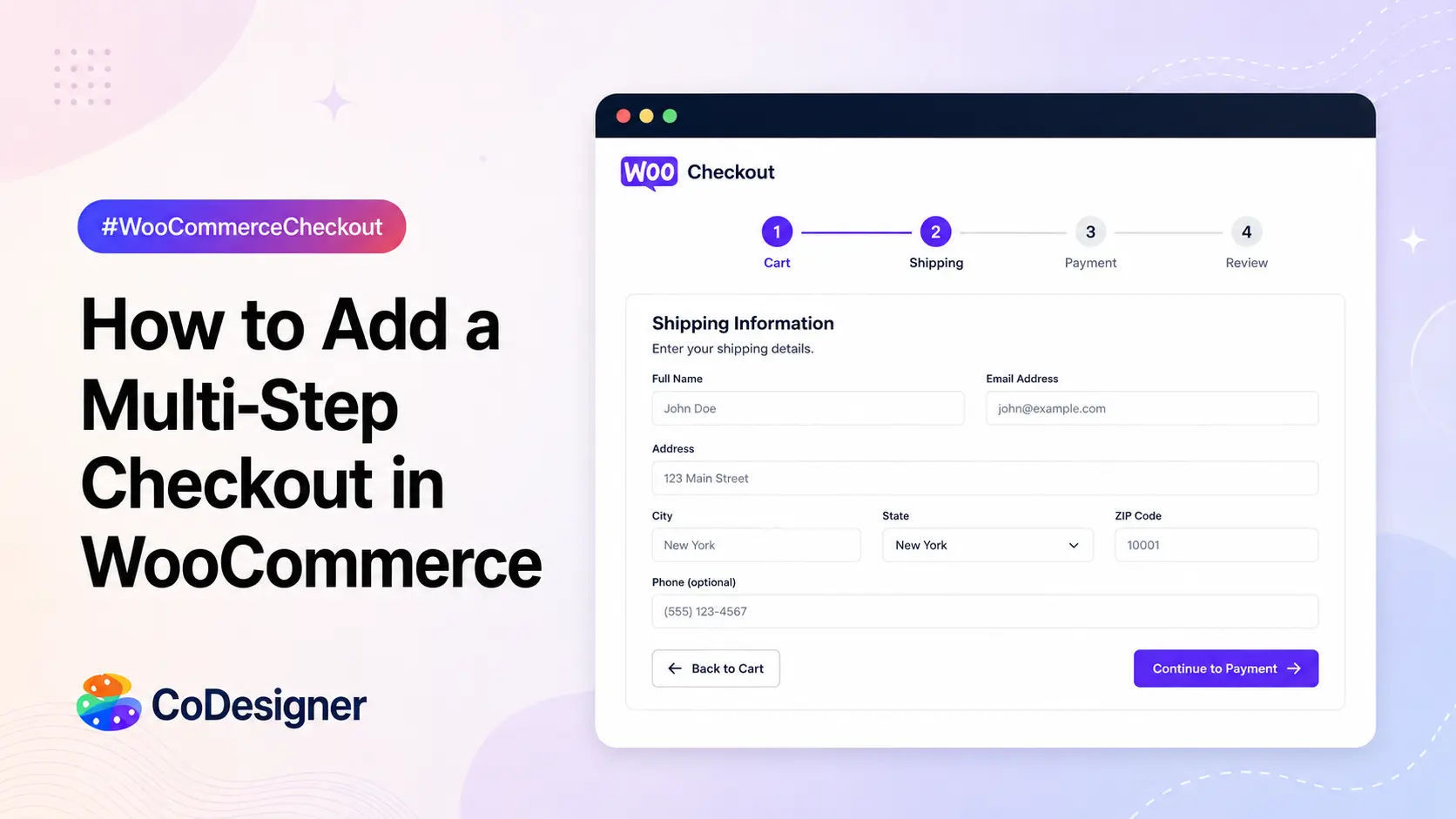
For WooCommerce stores, CoDesigner’s checkout page builder covers the full layout redesign without touching a single line of code. You can check out the full checkout implementation guide for your WooCommerce store.
4. Build a Loyalty Program With Genuine Value
Loyalty programs work. But only when they are built around real value, not points that collect in an account and go unused.
What Actually Moves Repeat Purchase Frequency
83% of companies report positive loyalty program ROI, with average returns of 5.2X. Loyalty programs increase repeat purchase frequency by 20–40% on average. The programs that underperform make earning confusing or redemption difficult to find. The ones that work are simple, visible, and give customers something worth working toward.
Is your current loyalty setup easy to understand in under 30 seconds? If a customer has to read an FAQ to figure out how to redeem, the program is already underperforming.
Points, Tiers, and What Buyers Actually Respond To
Clear earning rules matter. Customers should understand exactly how they earn without hunting for information. Purchases, reviews, referrals, and social shares are the most common earning actions.
Tiers work when the benefits at each level are genuinely worth achieving. A badge with no meaningful perk will not change buying behavior. Early access to new products, free shipping, or member-only pricing are the kinds of benefits that make top-tier status feel worth maintaining. The aspiration matters as much as the reward.
For WooCommerce stores, WPLoyalty, WooCommerce Points and Rewards, and Smile.io are the most widely used options for building structured programs.
5. Segment Customers and Stop Sending Everyone the Same Message
Generic broadcast emails are noise. Segmented, behavior-triggered messages are for retention.
Why Generic Messaging Accelerates Churn
56% of shoppers become repeat buyers after a personalized experience. First-time buyers who receive personalized post-purchase communication show 45% higher second-purchase rates. The pattern is consistent across categories: relevance brings buyers back, and irrelevance accelerates churn.
Sending the same email to a customer who bought once six months ago and a customer who buys every three weeks is not just inefficient. It signals that the store does not actually know the difference between the two.
Segmentation That Is Actually Actionable
Purchase history is the most practical starting point. A customer who bought from the pet care category is telling you something about their life. A customer who bought once and never returned needs a different message than one who buys regularly.
The behavioral triggers worth building first: a post-purchase follow-up within 48–72 hours, a “frequently bought together” email tied to the specific product they ordered, and a re-engagement email at 60 days of inactivity before the customer fully moves on.
Klaviyo, Omnisend, and AutomateWoo all sync with WooCommerce purchase data in real time and handle these flows without requiring manual segmentation each time.
6. Give Customers a Wishlist and a Reason to Return
A buyer who saves a product is not abandoning the store. They are signaling intent.
Why Wishlists Work as a Retention Mechanism
Wishlisted products create a built-in re-engagement opportunity. Stock availability notifications, price drop alerts, and targeted campaigns tied to saved items are among the highest-converting retention touchpoints available. A customer who has saved five products has five reasons to come back. The store just has to make acting on them easy.
Stock notification emails sent when a wishlisted item comes back in stock generate 12x higher revenue per email than standard campaigns. That is not a minor lift. It is a fundamentally different kind of engagement, driven by the intent the customer already expressed.
Making a Wishlist Work Beyond the Save Button
Design matters here more than most stores acknowledge. A wishlist page that looks like an afterthought gets ignored. One that matches the store’s visual identity and loads quickly gets used.
CoDesigner’s Wishlist widget lets WooCommerce stores style the wishlist page to match the rest of the store without custom development. For standalone wishlist plugins, YITH WooCommerce Wishlist and Smart Wishlist for WooCommerce are solid options that integrate directly with WooCommerce.
7. Use Social Proof at Every Decision Point
Social proof is not just for new visitors. It matters at every stage of the buying journey, including for customers who have already purchased from you before.
Where Social Proof Changes Behavior
95% of consumers say trust signals are essential for brand loyalty. A returning buyer exploring a new product category from the same store is still making a decision. Reviews from buyers who match their context reduce hesitation and increase the likelihood of a cross-category purchase. That kind of internal discovery, a loyal buyer expanding what they buy from a store they already trust, is one of the most underrated drivers of revenue growth.
Trust signals near checkout reduce abandonment at the final moment, the point where purchase anxiety peaks even for returning customers.
Placing Social Proof Where It Does Actual Work
Reviews should be visible on product pages without requiring a scroll. A ratings summary at the top of the page helps returning buyers scan and decide faster. Near the payment section, security badges, return policy links, and visible refund terms reduce the last-second hesitation that quietly costs repeat sales.
After delivery, an automated review request email timed 5 to 7 days after confirmed arrival captures feedback while the experience is fresh. It also turns satisfied buyers into advocates for the next new visitor.
8. Design Your Thank You Page to Start the Next Sale
The order confirmation page is the most wasted real estate in ecommerce.
Why the Default Confirmation Page Is a Missed Opportunity
The post-purchase moment is the highest-engagement point in the entire buying cycle. The buyer just committed. Their attention is at its peak. The default “order received” page responds with a timestamp, an order number, and silence.
That is not a retention strategy. That is a missed conversation.
What to Put There Instead
A next-purchase discount with a short expiry takes advantage of the buying momentum the customer already has. The timing is optimal. They just bought, they feel good about it, and a relevant offer at that moment is far more likely to convert than the same offer sent a week later.
A product recommendation tied to what they just bought feels relevant rather than promotional. An account creation nudge for guest buyers, framed around order tracking and saved preferences rather than data collection, converts a meaningful portion of one-time guests into returning account holders.
CoDesigner’s Thank You page builder lets WooCommerce stores build and customize this page without code, turning it from a dead end into the start of the next visit.
9. Win Back Lapsed Customers Before You Write Them Off
Most stores treat a lapsed customer as a lost one. They are not the same thing.
When to Start the Win-Back Sequence
85% of churn is preventable with early intervention. The standard trigger for most ecommerce categories is 60 days of inactivity. For consumables, supplements, coffee, and pet supplies, the window is shorter. For higher-consideration purchases, it is longer. The goal is to reach customers before they have fully moved on, not after they have already switched.
Timing is the difference between a win-back campaign and a desperate last email. Reach out too late, and the offer feels hollow. Reach out at the right moment, and customers often return simply because someone remembered them.
What the Sequence Looks Like
Three emails, spaced 7 to 10 days apart.
- Email 1 is a genuine check-in. No discount, no urgency. A short message acknowledging the gap and asking if everything was okay. This one catches customers who had a minor problem that was never resolved and would have churned silently without it.
- Email 2 introduces a targeted offer tied to their purchase history. Not a generic discount, but something connected to what they have actually bought. A customer who purchased a coffee grinder three months ago is a natural candidate for a curated beans recommendation with a first-time buyer offer attached.
- Email 3 is the last chance. A stronger incentive, a clear expiry date, and a direct call to action. After this, move them to a low-frequency general list rather than continuing to push.
AutomateWoo, Klaviyo, FluentCRM and Omnisend all support win-back sequences triggered by WooCommerce purchase data.
Final Words: Retention Is a System, Not a Campaign
The best customer retention strategies for ecommerce aren’t one-off initiatives, they’re systems. A checkout experience that leaves a good impression. Post-purchase emails that keep the conversation going. Loyalty mechanics that give customers a reason to return. Consistent communication that keeps the brand top of mind long after the order ships.
Each strategy in this guide works independently. But they compound when layered together. The goal isn’t a single program, it’s an experience so consistently good that leaving feels like a downgrade.
Start with whichever strategy has the biggest gap in your store right now. Fix that. Then build the next layer.
Frequently Asked Questions
What Is a Good Customer Retention Rate for Ecommerce?
The average ecommerce retention rate sits at 30%. Top performers reach 62%. For most categories, a repeat purchase rate between 25–40% is a realistic and worthwhile target. Below 20% signals a real problem, usually in the post-purchase experience rather than the product itself.
Is Customer Retention More Cost-Effective Than Acquisition?
Significantly. Acquiring a new customer costs 5–25x more than keeping an existing one. Retained customers convert faster, spend more per order, and generate referrals that lower acquisition costs over time. In 2026’s ad cost environment, a retention-first strategy is increasingly the foundation of profitable ecommerce growth rather than a secondary consideration.
Do Loyalty Programs Actually Improve Repeat Purchase Rates?
Yes, when the mechanics are simple, and the program stays visible. The programs that underperform make earning confusing or redemption hard to act on. The single biggest driver of loyalty program performance is visibility: regularly reminding customers of their balance and what they are working toward.
How Does Store Design Affect Customer Retention?
Directly. 88% of users will not return after a poor experience. Every design touchpoint, from product pages to cart to checkout to confirmation emails, shapes the memory a buyer carries into their next purchase decision. Stores that treat design as a retention tool consistently outperform those that treat it as a one-time aesthetic project.